

Overview
Transparency is a key principle for any organization navigating issues of trust, algorithmic decision-making, and public accountability. In a solo-authored book chapter, I examined how emerging technologies such as social media, artificial intelligence, and automated news production are complicating the pursuit of transparency. The chapter challenges the assumption that transparency alone can restore public confidence in journalism, noting that trust in the news media remains low despite many high-profile initiatives. I argue that the relationship between transparency and trust is more complex than commonly believed.
My Role
I was invited to contribute the chapter on transparency by the editors of The Routledge Companion to Digital Journalism Studies. The edited volume features a collection of essays addressing fundamental issues in the field of digital journalism.
Key Insights

Digital opportunities and challenges: While the affordances of digital media — hyperlinks to other sources of information, unlimited space, and real-time news updates — appear conducive to openness and disclosure, they also create new risks in the pursuit of transparency. Online environments make it easy to obscure identity and intent, fueling public skepticism. The spread of unchecked information online under the guise of openness and immediacy can allow organizations to evade accountability by quietly deleting errors instead of openly acknowledging them. And social media platforms like X (formerly Twitter) provide little space for the context and nuance that transparency demands.
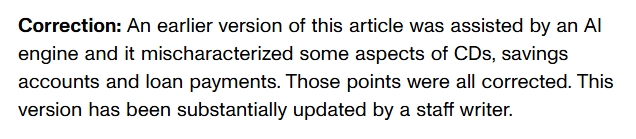
Algorithmic complexity: Algorithms and AI are powerful but opaque factors in digital news production and distribution, shaping coverage in ways that cannot easily be explained and may not even be fully understood by journalists themselves. I highlight the case of tech website CNET, which published a short news item containing an embarrassing mistake under the byline CNET Money staff, only later to reveal that the piece — and the error — had been generated by AI.
Transparency vs. trust: Empirical research shows that transparency initiatives have had mixed or minimal effects on public trust. Often, such efforts are “preaching to the choir” with little impact on the most skeptical news consumers. I question whether transparency can restore faith in the news media when public skepticism seems rooted in a deeper distrust of institutions.
Significance

This chapter bridges journalism ethics with the broader challenges of digital governance, platform accountability, and algorithmic transparency. Its insights contribute to a vital conversation about how organizations can maintain credibility when technology often functions like a “black box” whose inner workings are difficult to understand, let alone explain to a skeptical public.
Deliverable
“Transparency in Digital Journalism,” The Routledge Companion to Digital Journalism Studies, 2nd edition (2024).
 Kyle Heim