

Overview
Transparency has become a defining value for organizations from news outlets to tech companies as they face mounting demands for accountability. In two book chapters written more than a decade apart, Dr. Stephanie Craft and I critically examined the ethical and practical dimensions of transparency, focusing on its potential to build trust while also acknowledging its risks. The 2008 chapter explored the early debates and the ambiguity over how to define transparency. The 2020 update revisited the topic in light of a dramatically transformed media environment, addressing the rise of new information platforms and formal recognition of transparency in industry ethics codes. While our discussion was grounded in journalism, the themes we examined resonate across industries where credibility is paramount.
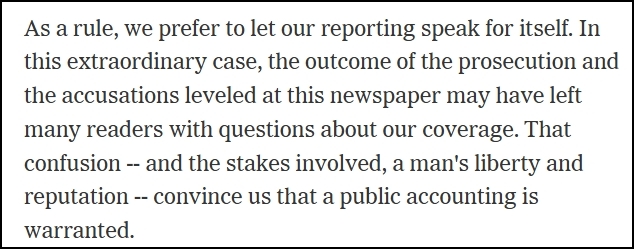
2008 chapter: This chapter, written while transparency was gaining currency in media and academic circles, laid a foundation for understanding the concept, drawing heavily on the business and political science literature. We traced early transparency initiatives in journalism such as ombudsman columns and public corrections and warned of the risks of performative transparency or over-disclosure.
2020 chapter: In this update, we examined how transparency had become a formalized ethical standard (for example, its inclusion in the Society of Professional Journalists ethics code). We cited several high-profile examples, such as PBS publishing the unedited interviews for its documentary on Russian President Vladimir Putin’s attempts to sway the 2016 U.S. presidential election and The Washington Post’s detailed explanations of its reporting decisions surrounding sexual misconduct allegations against Alabama U.S. Senate candidate Roy Moore.
My Role
I began working with Dr. Craft on research about transparency as a doctoral student at the University of Missouri. We were invited by the editors of the Routledge Handbook on Mass Media Ethics to contribute a chapter on the concept, with Dr. Craft serving as lead author. For the updated second edition, 12 years later, I was the lead author.
Key Insights

Passive vs. active transparency: We distinguished between transparency as availability (making information such as documents or interview transcripts accessible) and as active disclosure (explaining decisions and motives), arguing that transparency is of little added value unless it takes the more active form.
Promise of transparency: Transparency fosters dialogue with the audience, making an organization more accessible and responsive to public feedback. When journalists explain how they make decisions or admit mistakes openly, they can help citizens understand the news process and feel more confident in what they’re reading or viewing.
Pitfalls of transparency: Too much transparency can backfire by overwhelming audiences with so much information that they can’t separate what’s important from what’s not. Opening the news process to public view can also deprive journalists of the space they need to do good work by exposing internal deliberations that require a degree of privacy.
Significance
These chapters are widely cited in discussions of media ethics and have helped shape scholarly debates on the role of transparency in a fragmented media landscape. One of the handbook’s editors praised the revised 2020 chapter as “the definitive statement on transparency” with “iconic status for this issue henceforth.”
By bridging theory with real-world examples, this work highlights the complex relationship between openness and trust. Its lessons apply to any organization striving to maintain credibility in an age of public skepticism.
Deliverables

- Stephanie Craft and Kyle Heim, “Transparency in Journalism: Meanings, Merits, and Risks,” The Handbook of Mass Media Ethics, 1st edition (2008).
- Kyle Heim and Stephanie Craft, “Transparency in Journalism: Meanings, Merits, and Risks” (updated and expanded), Routledge Handbook of Mass Media Ethics, 2nd edition (2020).
 Kyle Heim